Perspective: From dialogue to delivery
Reflections from the High-Level Dialogue on Advancing Energy Access and Clean Cooking Solutions.
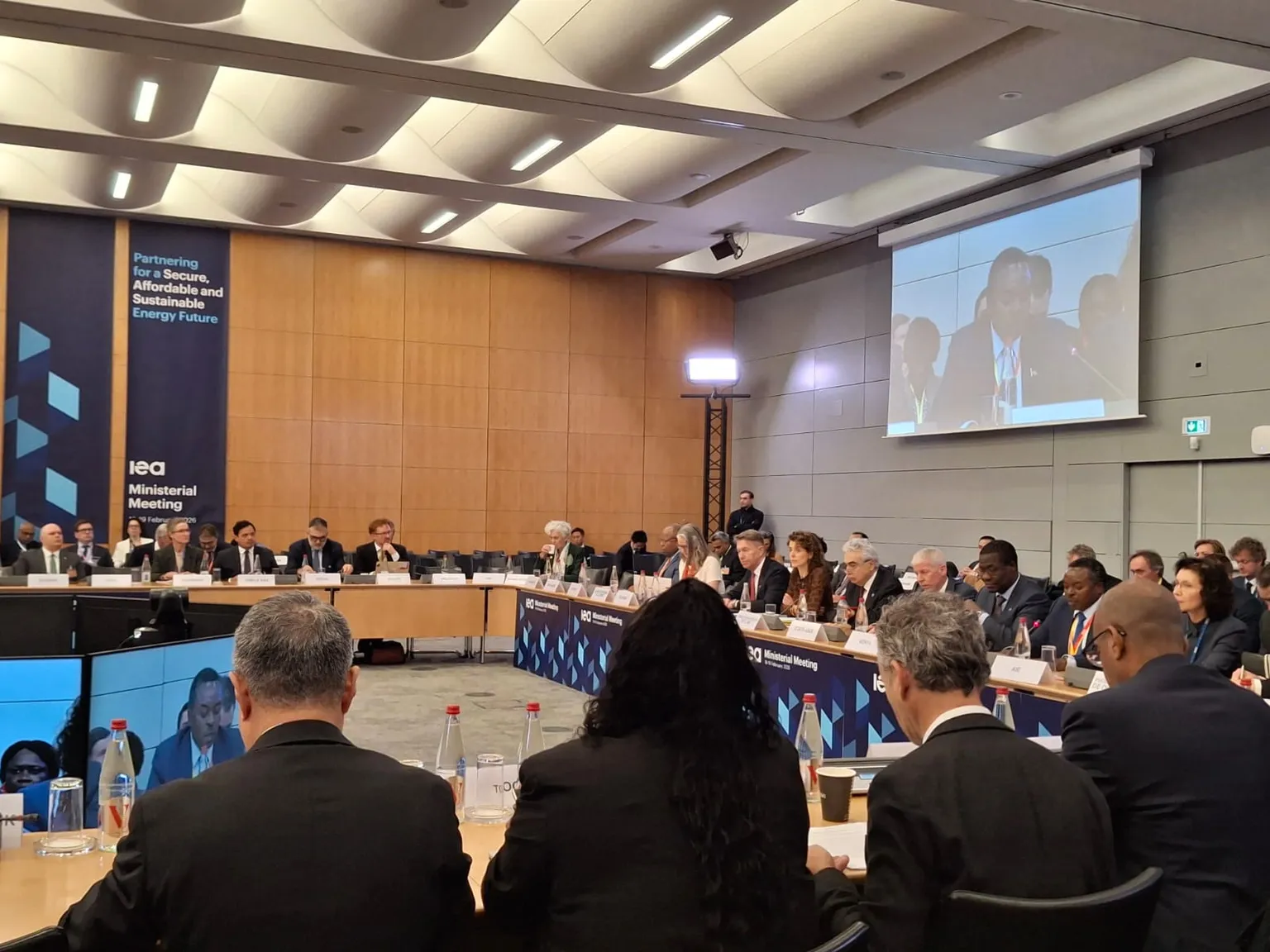
In Paris recently, one message cut through the formalities: ambition is not the problem. Implementation is.
At the High-Level Dialogue on Advancing Energy Access and Clean Cooking Solutions, convened by the International Energy Agency and co-led by Kenya, Norway, and the United States, governments, financiers, and industry leaders gathered ahead of the 2026 Summit on Clean Cooking in Africa in Nairobi. Political commitment was evident. Clean cooking and universal electricity access now sit firmly at the centre of the international development agenda.
The real test is whether organisations are ready to deliver at scale.
Momentum is real. But progress must accelerate
Distributed renewable energy and clean cooking are no longer niche topics. They are embedded in national energy plans, international financing strategies, and multilateral discussions. Countries such as Kenya have demonstrated that when off-grid solar and clean cooking are integrated into national policy and financing instruments, markets respond. Commercial capital follows clarity.
The private sector’s message in Paris was consistent. The barriers are rarely about technology or supply. They are about regulation, predictability, and managing risks. Investors need streamlined permitting, coherent fiscal frameworks, and credible risk mitigation instruments. Where these conditions are in place, scale becomes possible.
As Tanzania’s Minister of Energy, Deogratius Ndejembi, stated during the dialogue:
We need to move from commitments to action, from dialogue to accountability.
The call was echoed by other countries in the room. The emphasis has shifted from pledges to performance.
Clean cooking is not optional. It is urgent
More than 800,000 premature deaths each year in Africa alone are linked to household air pollution. Behind every statistic is a household exposed to smoke, a child missing school, and a health system under strain.
Climate considerations are increasingly central to the clean cooking debate. Yet the development and public health case remains equally compelling. Clean cooking reduces preventable illnesses, lowers pressure on forests, and frees up time for education and income generation.
Important institutional shifts were announced in Paris. The International Energy Agency will host the Clean Cooking Alliance to reinforce the integration of clean cooking into national energy planning. New initiatives were launched, including the United States’ Clean Cooking Accelerator. Impact investors signalled their readiness to deploy additional capital, provided enabling conditions are strengthened.
The architecture is strengthening. The challenge is ensuring it translates into sustained adoption.
The missing centre: the end-user
Much of the current effort focuses on improving enabling environments to unlock private investment. That work is essential. But supply alone does not guarantee adoption.
For households switching from firewood or charcoal to LPG or electricity, the decision is complex. It involves trust, cost, habit, and reliability. Two barriers consistently emerge: awareness and affordability.
Experience shows that when these barriers are addressed directly, change can happen rapidly. Targeted behavioural change communication, such as applied through the Smoke Free Village approach implemented by SNV and partners, has led to entire communities shifting to clean cooking solutions, with most households opting for gas or electricity. Once the health, time, and economic benefits are clearly understood, many families choose to buy a clean cooking device.
This shift in perception is not a soft intervention. It is fundamental to market sustainability. Predictable, sustained demand gives companies the confidence to invest in distribution networks, after-sales services, and last-mile delivery. Without that demand, supply chains remain fragile, particularly in remote and underserved areas where commercial risk is higher, and margins are thinner.
A sustainable market, therefore, requires both regulatory reform and demand activation. Without this balance, progress risks stalling before it reaches those who need it most.
Regulation, finance, and the question of risk
Industry leaders in Paris were clear. They are ready to scale. LPG distributors highlighted rapid growth in areas with regulatory clarity. Carbon finance was identified as a critical tool to lower consumer prices and leverage commercial capital, provided governments streamline authorisation processes and reduce administrative bottlenecks.
Blended finance vehicles and catalytic funds are mobilising institutional investors. Development finance institutions signalled additional public policy loans and grant facilities for electric cooking and integrated energy solutions. Several actors stressed that the constraint is often not capital availability but the risk profile of operating in frontier and last-mile markets.
Predictable regulatory frameworks reduce uncertainty. Reduced uncertainty unlocks capital. Capital enables scale.
The task ahead is therefore systemic. Permitting processes must be streamlined. Fiscal regimes must be coherent. Risk mitigation instruments must be accessible. Without these elements, commitments struggle to translate into results.
Linking electrification and clean cooking
A strong message emerging from the dialogue was the need to align clean cooking ambitions with electrification efforts rather than treating them as separate tracks. With a major push underway to achieve universal electricity access, there is an opportunity to integrate electric cooking solutions where grid or off-grid power is available.
A technology-neutral approach remains essential. LPG, biogas, ethanol, improved biomass, and electric cooking all play different roles depending on the context. Reaching the last mile requires pragmatism and responsiveness to local realities, not single-technology prescriptions.
Flexibility and integrated approaches will be key in addressing the massive gaps that still exist.
From voluntary plans to country-level accountability
The voluntary action plan proposed in Paris is an important step. The next phase is more demanding. Proposed actions must be translated into country-specific pathways, grounded in institutional capacity and local market conditions.
This requires mapping what is already underway, identifying gaps, and clarifying responsibilities. It requires combining regulatory reform, catalytic finance, behavioural change communication, and end-user financing into coherent national strategies.
The upcoming Summit on Clean Cooking in Africa provides an opportunity to share practical lessons from countries where integrated approaches are already delivering results. The focus should be clear: what has worked, where the bottlenecks lie, and how implementation can accelerate.
Accountability will define success
There is no shortage of ambition. Alignment across governments, industry, and development partners is stronger than ever. The defining question now is whether accountability mechanisms are strong enough to convert that ambition into measurable progress.
Government commitments must translate into regulatory reform. Financing pledges need to move beyond mere announcements and become targeted, timely disbursements. National strategies should be implemented at the sub-national level, where markets either function or fail. And households must be supported not only in accessing clean energy solutions, but also in adopting and sustaining them over time.
Energy access is not merely a technology or infrastructure challenge. It is, above all, a governance, market development, and behavioural challenge that requires explicit focus on gender equality and social inclusion. Without consistent follow-through across these dimensions, momentum risks dissipating.
If implementation accelerates, the impact extends far beyond energy access indicators. Clean cooking reduces preventable deaths. Electrification supports enterprise growth. Together, they strengthen economic resilience and social stability, particularly for women and youth.
The pathway to universal access is visible. The task ahead is disciplined execution.
Scaling clean cooking in rural Cambodia
Explore this learning brief to learn how five entrepreneurs are turning clean cooking ambition into sustainable market growth.

Martijn Veen
Global Head of EnergyMartijn Veen is Global Head of Energy at SNV, where he leads SNV’s global energy portfolio and provides strategic oversight for energy access and market development programmes. He has more than 20 years of experience in renewable energy market systems, private-sector engagement, and energy access programming across Africa and Asia, including the design and implementation of Results-Based Financing, inclusive market interventions, and demand-activation approaches.